
Academician
Faculty members
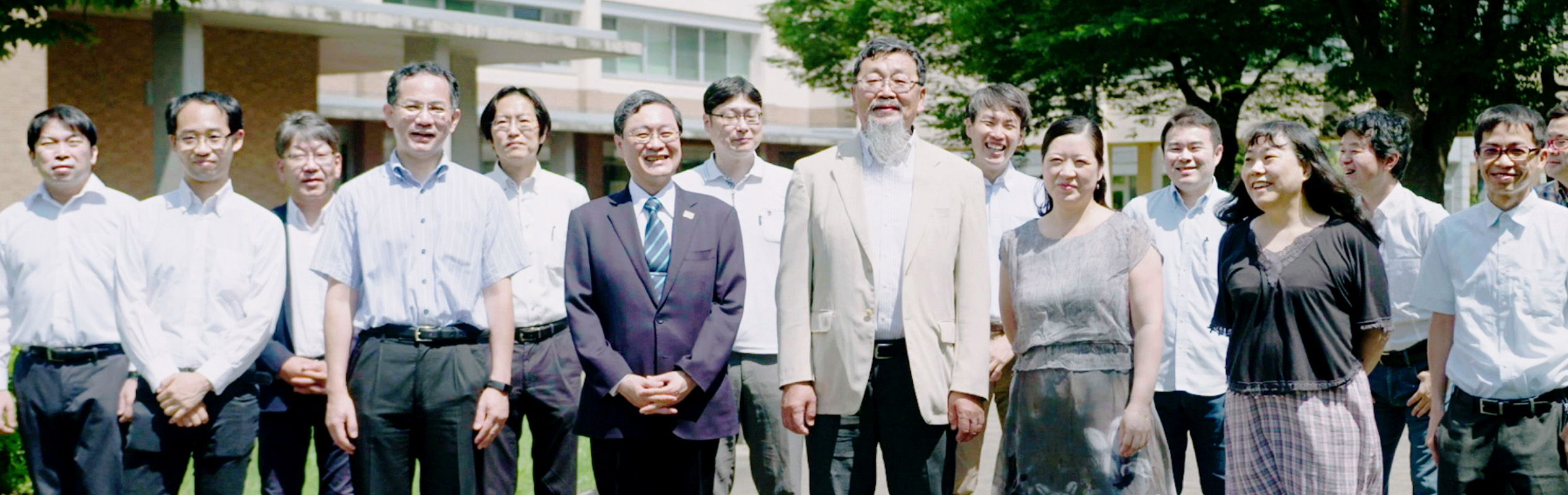

Profile
Kosuke Oiwa
- Job Title
- Assoc. Prof.
- Research Themes
- The central research concept of our laboratory is to develop an AI platform that predicts future changes in human states from biomedical and clinical time-series data naturally obtained in medical, educational, and daily-life settings, thereby supporting human decision-making and actions. By integrating facial images, biological signals, clinical data, behavioral information, and environmental information, we are developing practical biosensing technologies through a workflow consisting of measurement, feature extraction, prediction, and support.https://researchmap.jp/kou_oiwa/
- Research
Achievements https://researchmap.jp/kou_oiwa/
- Laboratory
Name - Medial and Human Support Engineering Lab.
- Laboratory
Website https://sites.google.com/view/mhselab
- メールアドレス
- oiwa(at)vos.nagaokaut.ac.jp
Research Overview
The central research concept of our laboratory is to develop an AI platform that predicts future changes in human states from biomedical and clinical time-series data naturally obtained in medical, educational, and daily-life settings, thereby supporting human decision-making and actions. We integrate facial images, biological signals, clinical data, behavioral information, and environmental information, and develop practical biosensing technologies through a workflow consisting of measurement, feature extraction, prediction, and support.
For example, we analyze time-series data such as facial color, facial skin temperature, and facial expression changes obtained from facial images; ear-canal pressure pulse waves measurable with earphones or headphones; and blood pressure, laboratory values, and treatment records collected in medical settings. Through these analyses, we aim to detect future changes in human states and potential risks at an early stage.
Theme 1: Future Prediction of Intradialytic Hypotension
Intradialytic hypotension, which occurs during hemodialysis, is an important clinical issue that affects both patient burden and clinical management. In our laboratory, we study AI technologies for early detection of signs preceding intradialytic hypotension by using blood pressure data measured during dialysis, as well as visible and infrared facial images, facial color changes, facial temperature changes, and facial expression changes.
Conventional blood pressure measurement may not capture changes until hypotension has already occurred. Therefore, we analyze subtle changes contained in facial image time-series data to identify signs that appear before blood pressure decreases. Through this approach, we aim to support early decision-making by medical staff and contribute to medical safety.
Theme 2: Estimation of Blood Glucose and Blood Pressure Changes Using Multispectral Facial Images
Low-burden monitoring of vital signs such as blood glucose and blood pressure is important for daily health management and early detection of disease-related risks. In our laboratory, we use multispectral facial images, including visible and near-infrared images, to extract optical features associated with changes in blood glucose and blood pressure. Our goal is to develop non-contact and non-invasive remote vital-sign sensing technologies.
Facial images may contain information related to skin blood flow, hemodynamics, and metabolic states. We analyze spatial features and time-series changes in multispectral images and aim to construct models that estimate biological information such as blood glucose and blood pressure while considering individual differences.
Theme 3: Estimation of Physiological and Psychological States Using Ear-Canal Pressure Pulse Waves
Our laboratory focuses on ear-canal pressure pulse waves that can be measured using ordinary earphones or headphones, and studies technologies for unobtrusive assessment of physiological states in daily-life and learning environments. Ear-canal pressure pulse waves may contain information related to hemodynamics, stress, psychological states, and learning engagement.
Because earphones and headphones are widely used in daily life, ear-canal pressure pulse sensing may enable continuous monitoring of health status, concentration, and stress without placing a large burden on users. We analyze waveform features and time-series changes in ear-canal pressure pulse waves and aim to apply this technology to medical, educational, and daily-life support.
Theme 4: Analysis of ICU and Clinical Time-Series Data
In ICUs and other medical settings, various types of clinical time-series data, such as vital signs, laboratory values, treatment records, and nursing records, are continuously recorded. In our laboratory, we analyze these data using AI and machine learning to develop technologies for predicting changes in patient states and future risks.
In clinical practice, patient conditions change over time; therefore, it is important to capture not only single-point values but also the temporal flow of changes from the past to the present. We aim to extract temporal patterns from clinical time-series data and develop predictive models that contribute to early warning, risk detection, and medical safety support.